Locations
A Boundless Classroom
Karst Climber programs take place across a range of regions in China, each offering a distinct character, cultural context, and learning environment. From rural valleys and mountain terrain to historic cities and traditional villages, these locations allow students to explore China through direct experience rather than observation alone.
Our tailored outdoor education programs are developed in conjunction with each school’s needs and built around the strengths of each location, combining outdoor activities, cultural engagement, and environmental exploration opportunities.
A Boundless Classroom
Karst Climber programs take place across a range of regions in China, each offering a distinct character, cultural context, and learning environment. From rural valleys and mountain terrain to historic cities and traditional villages, these locations allow students to explore China through direct experience rather than observation alone.
Our tailored outdoor education programs are developed in conjunction with each school’s needs and built around the strengths of each location, combining outdoor activities, cultural engagement, and environmental exploration opportunities.
A Boundless Classroom
Karst Climber programs take place across a range of regions in China, each offering a distinct character, cultural context, and learning environment. From rural valleys and mountain terrain to historic cities and traditional villages, these locations allow students to explore China through direct experience rather than observation alone.
Our tailored outdoor education programs are developed in conjunction with each school’s needs and built around the strengths of each location, combining outdoor activities, cultural engagement, and environmental exploration opportunities.
Locations
A Boundless
Classroom
Karst Climber programs take place across a range of regions in China, each offering a distinct character, cultural context, and learning environment. From rural valleys and mountain terrain to historic cities and traditional villages, these locations allow students to explore China through direct experience rather than observation alone.
Our tailored outdoor education programs are developed in conjunction with each school’s needs and built around the strengths of each location, combining outdoor activities, cultural engagement, and environmental exploration opportunities.
A Boundless
Classroom
Each location is chosen because it teaches something that cannot be replicated elsewhere. Click any province to explore its locations in full.
Limestone Landscapes
& Minority Cultures
The karst heartland. Yangshuo is where Karst Climber was founded. South China contains our most versatile and proven program terrain.
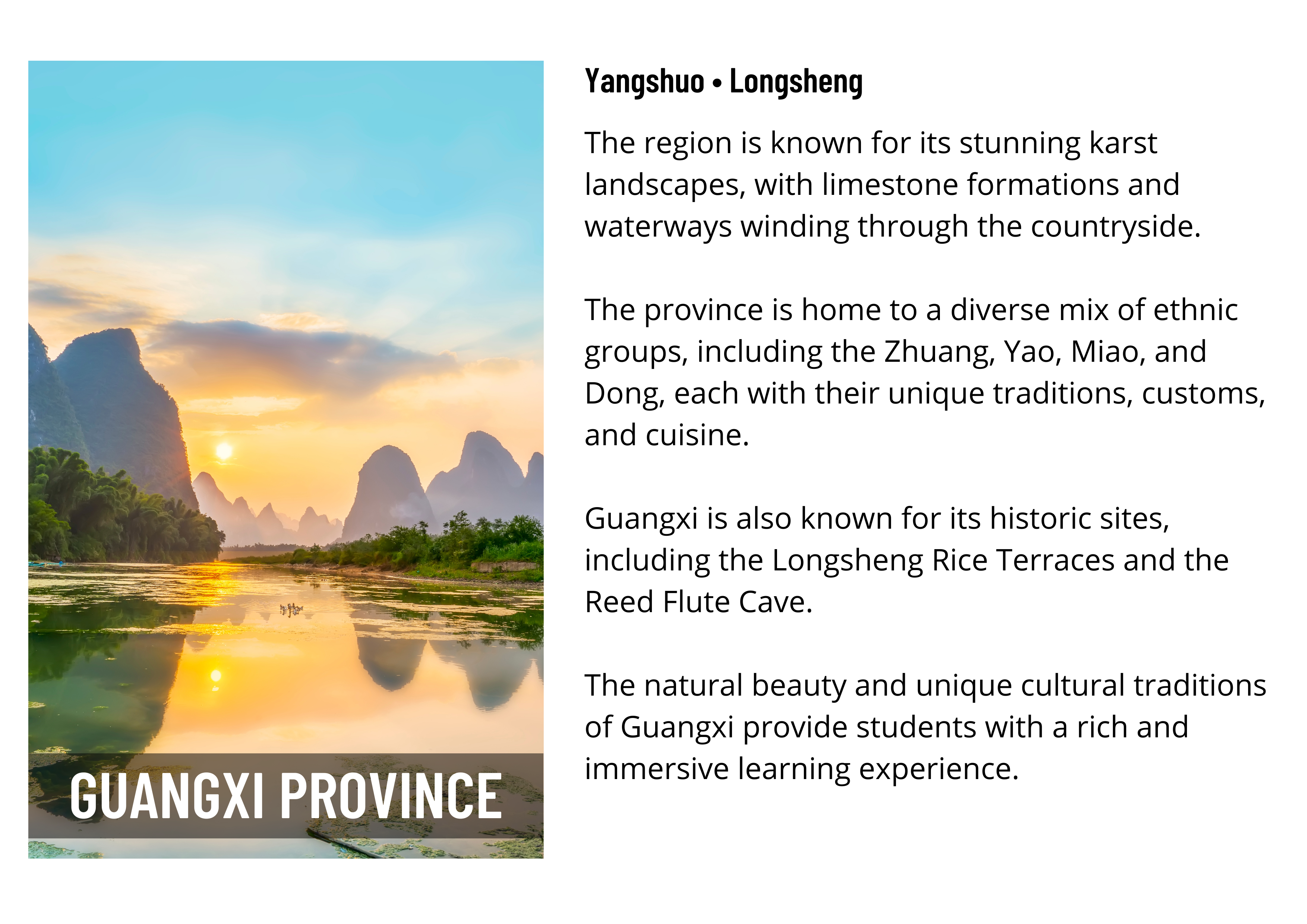
Guangxi
Karst Climber's home terrain. This is where it all started in 2000. Limestone towers, rice terraces, minority villages, and four distinct program locations spread across the province — from the valley floors of Yangshuo to the extraordinary sinkhole country of Leye.
Hunan
Sandstone pillar landscapes that defined a thousand years of Chinese landscape painting, and ancient Tujia villages built into the gorges below.
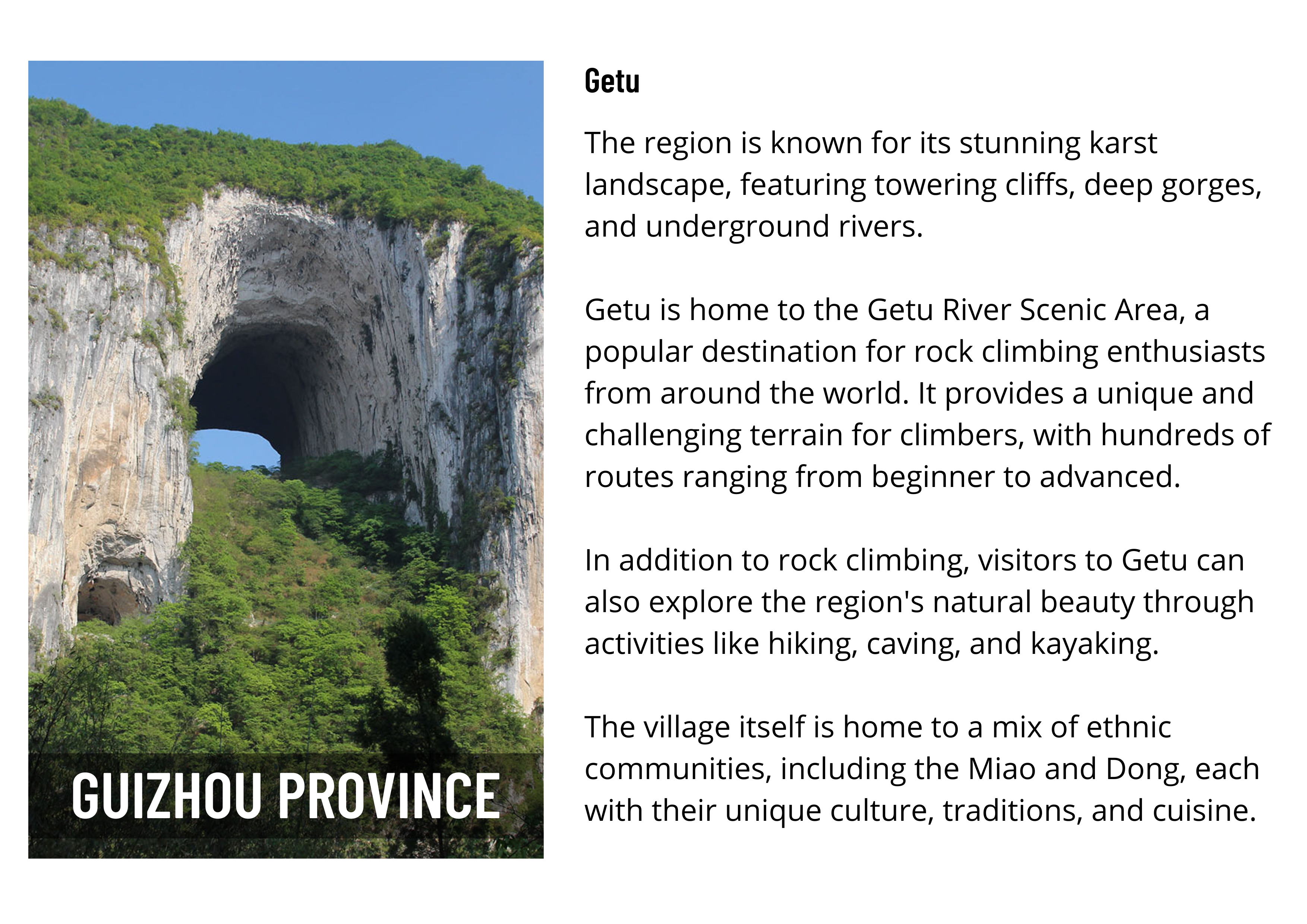
Guizhou
World-class limestone climbing terrain in a Miao minority valley. One of the most distinctive locations in our entire portfolio.
Guangdong
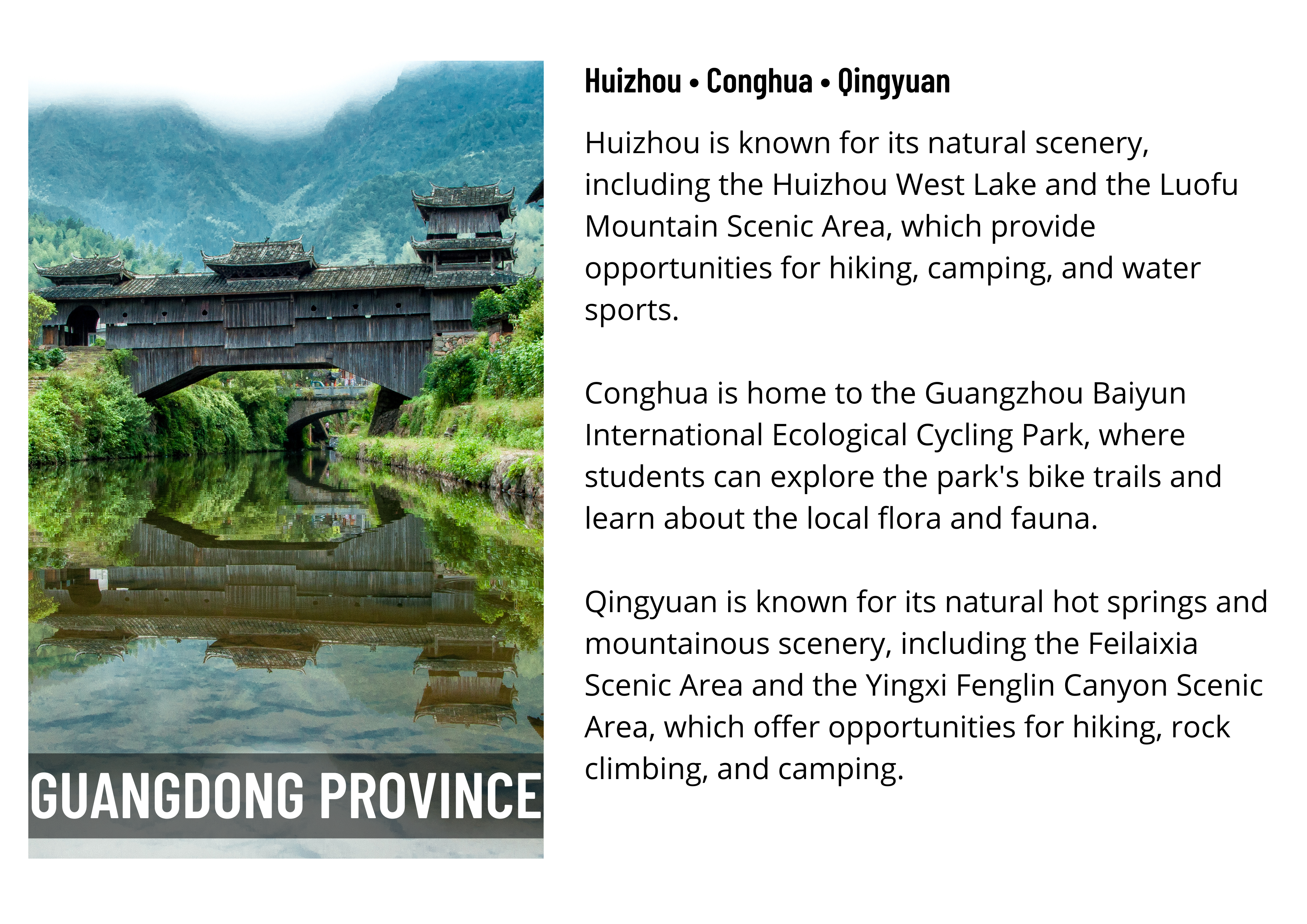
Pearl River Delta archipelago, craft culture, and accessible outdoor terrain for Greater Bay Area schools.
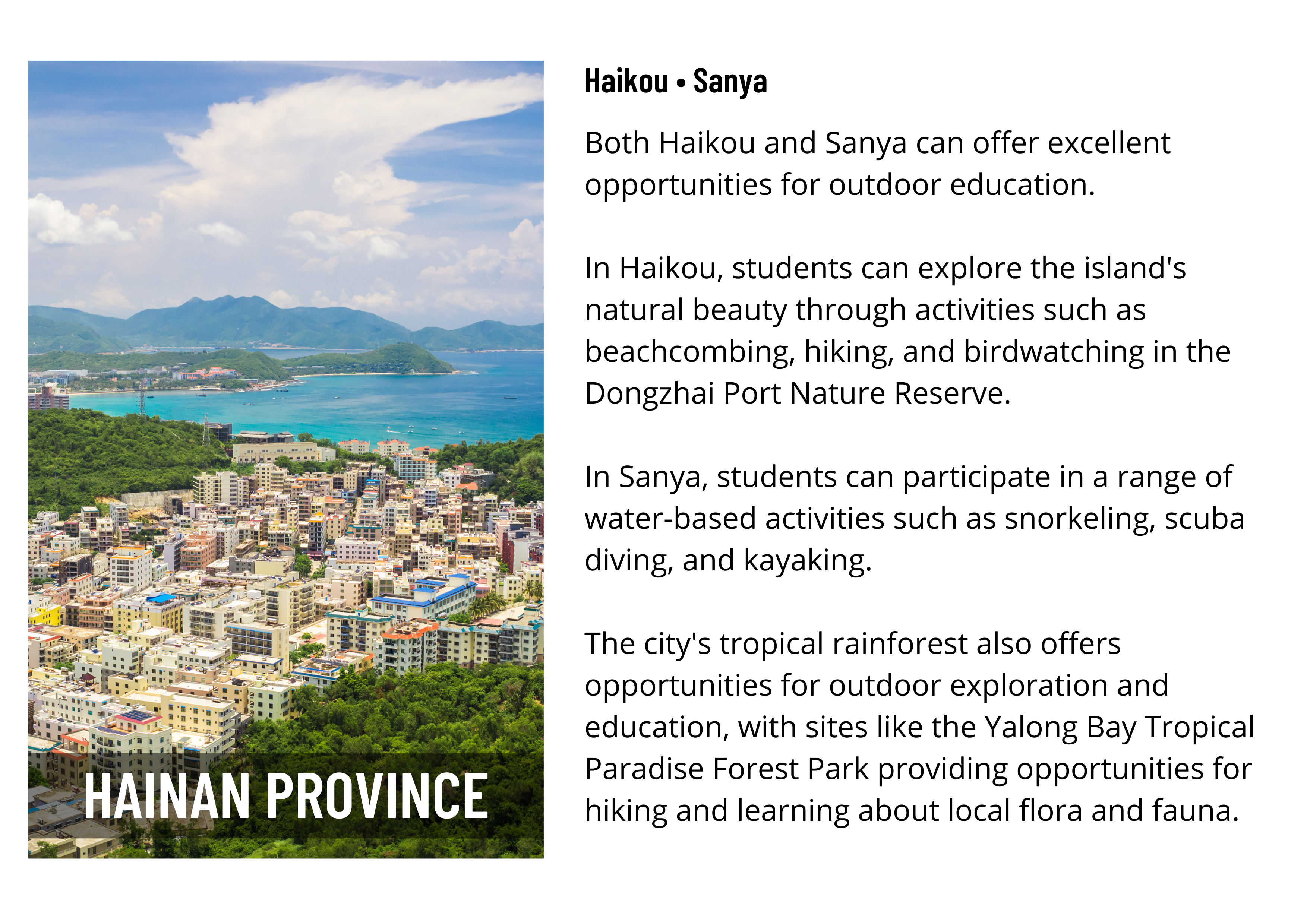
Hainan
Tropical coastlines, coral reef ecology, and Li and Miao minority culture on China's only tropical island province.
Ancient Cities, Water Towns
& Mountain Trails
Accessible from Shanghai and the major east coast cities. Rich in history, architecture, and natural environments within a compact geography.
Zhejiang
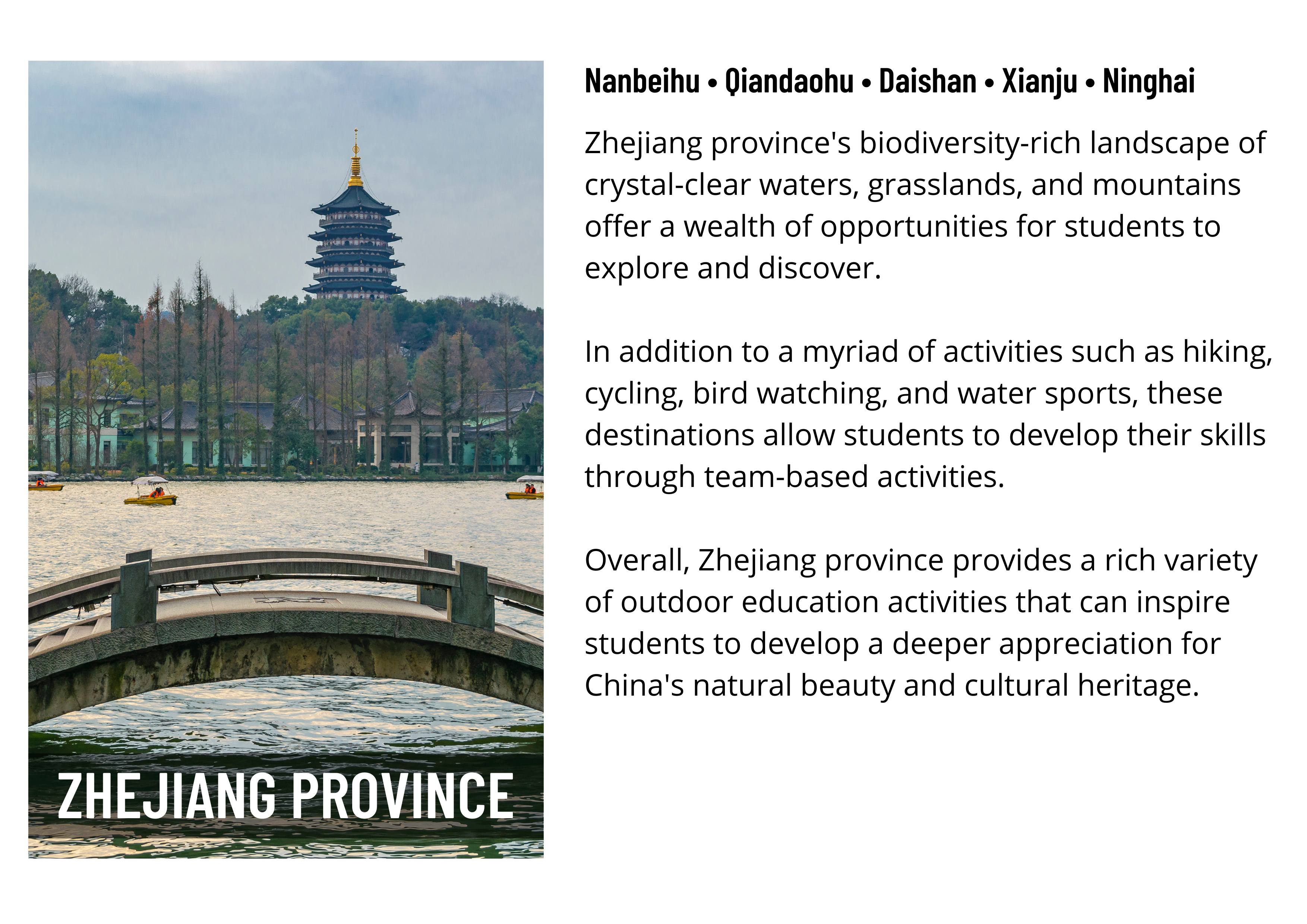
Reservoir islands, bamboo forests, colonial hill retreats, and China's oldest maritime port city — all within reach of Shanghai.
Fujian
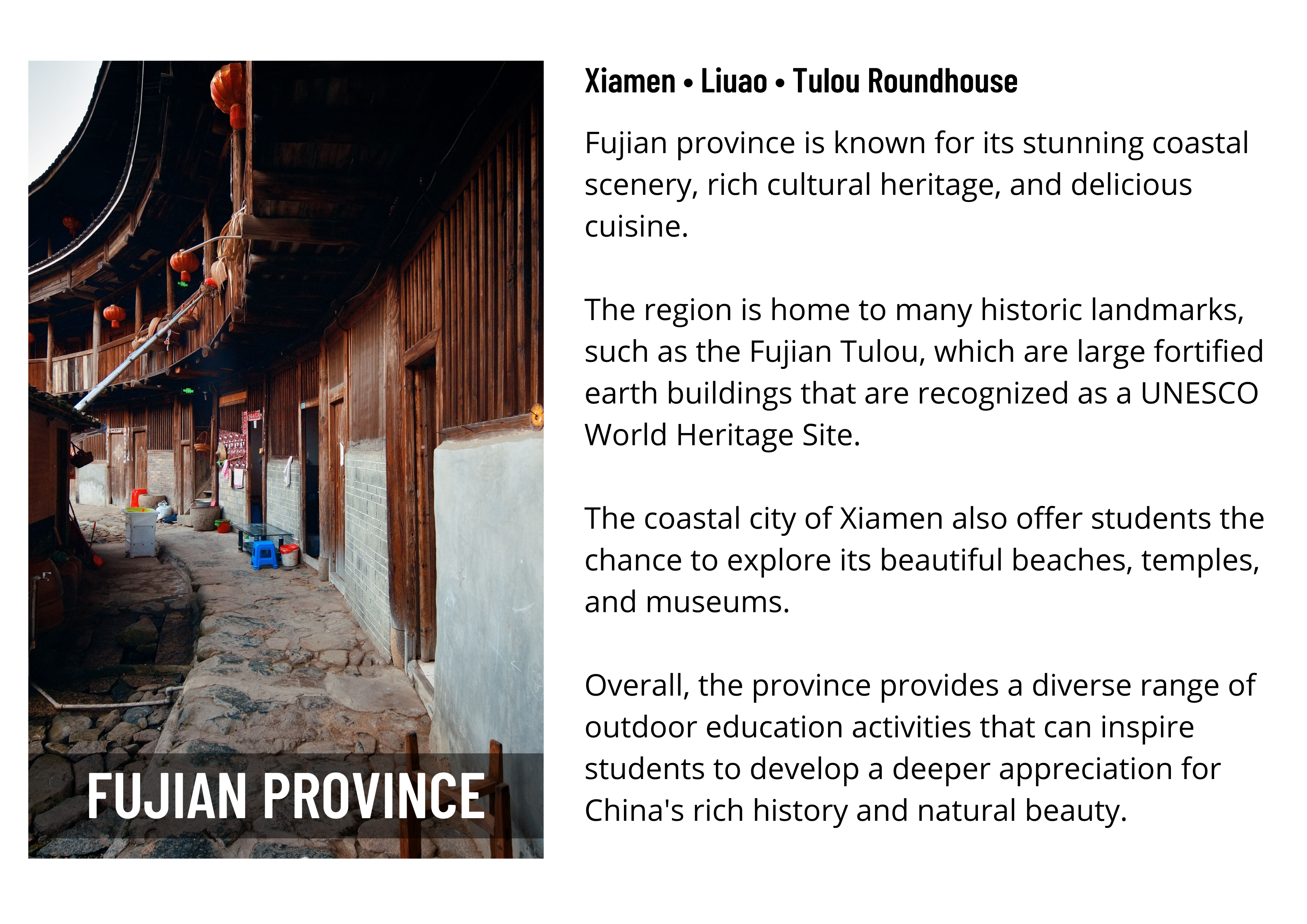
Overseas Chinese heritage and medieval maritime trade in two cities whose history rewrites every assumption about China.
Shanghai
Yangtze delta wetlands, rural islands, and canal towns within reach of China's largest city.
Jiangsu
Classical gardens, canal cities, and one of China's most historically layered imperial capitals.
Anhui
The mountain that defined Chinese landscape painting. Serious terrain for serious groups.
Jiangxi
The ceramic capital of the world and China's most intact Huizhou village landscape.
Hubei
Deep gorge country and Tujia minority culture in the mountains of western Hubei.
Henan
Imperial capitals, Buddhist cave art, and a city that was once the most populous on earth.
Imperial History
& Grassland Horizons
From unrestored Great Wall to endless steppe. Programs engage with the sweep of Chinese history and the scale of the northern landscape.
Beijing
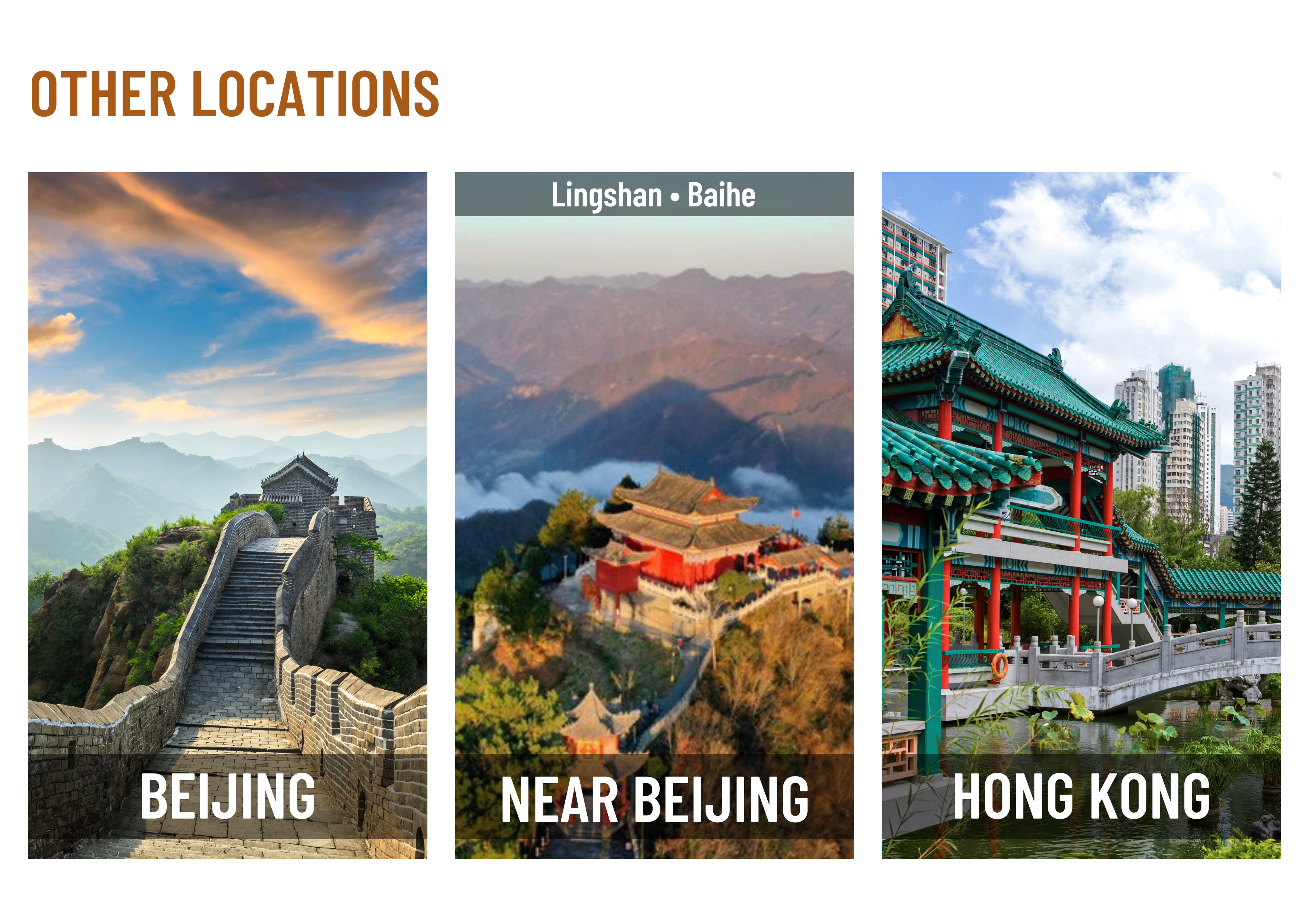
Unrestored Great Wall sections and granite climbing crags well beyond the tourist circuits.
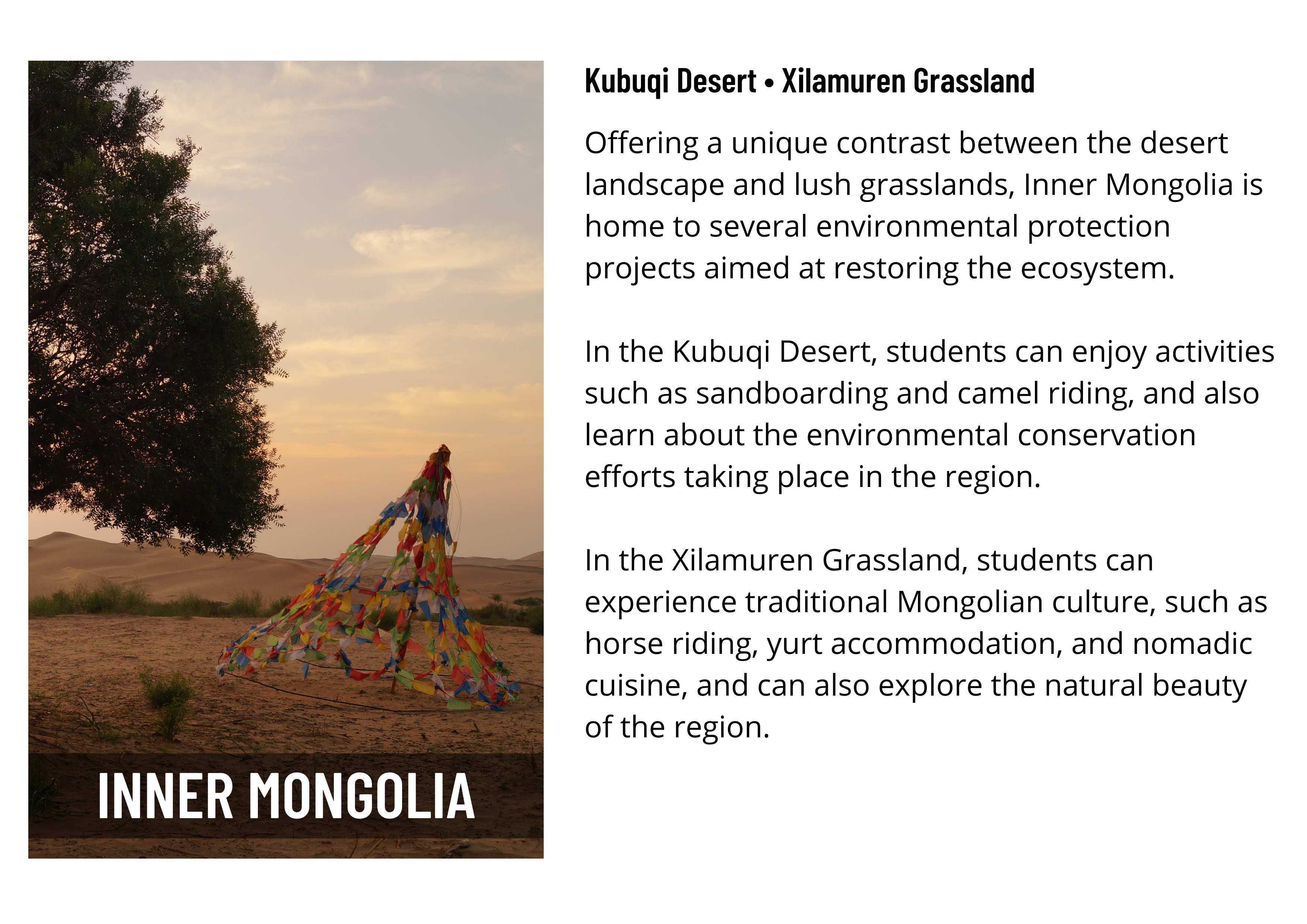
Inner Mongolia
Grassland steppe, nomadic herding culture, and the largest sky most students have ever stood under.
Shaanxi
The Silk Road's eastern terminus and thirteen dynasties of civilisation in a single navigable city.
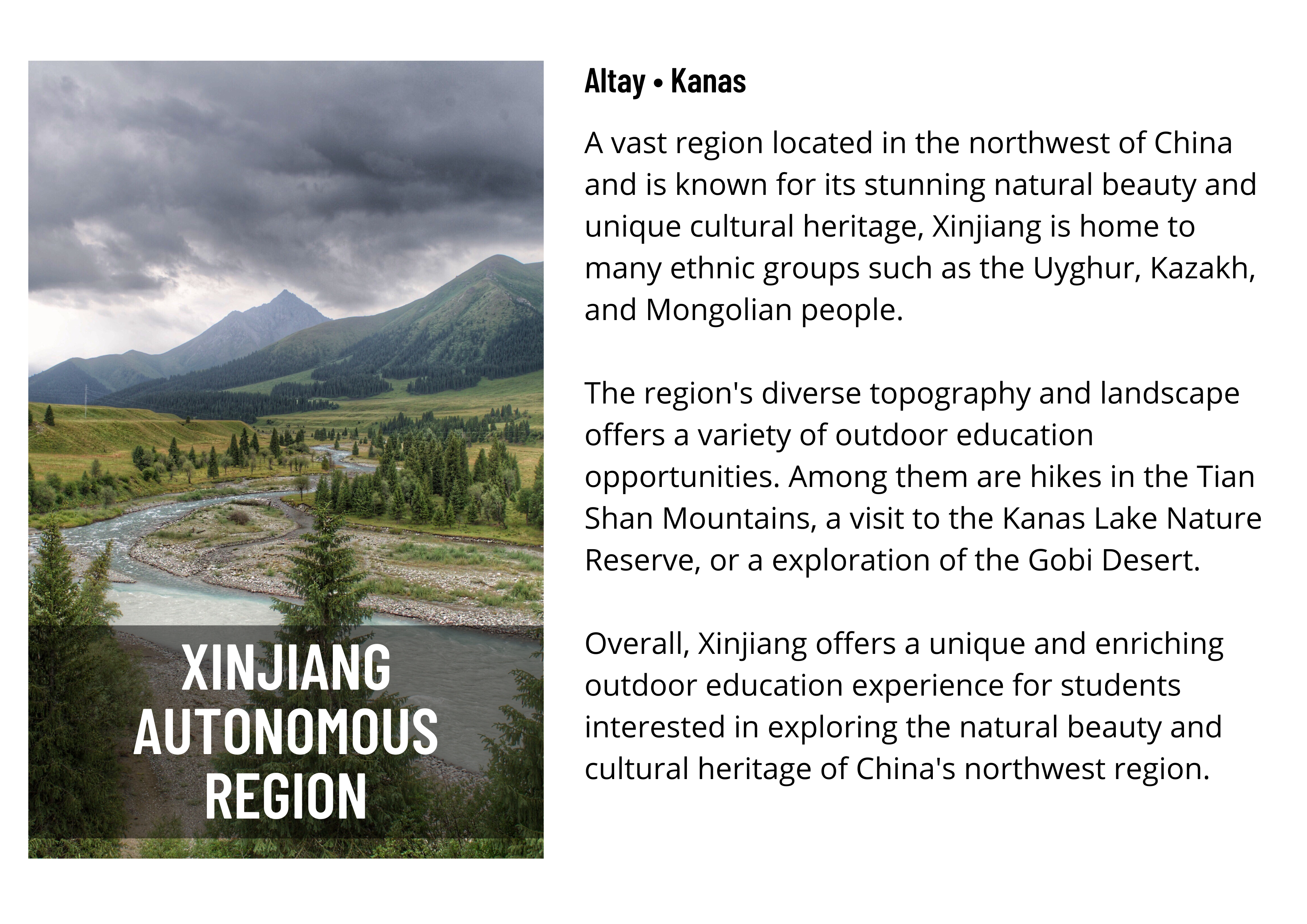
Xinjiang
Remote Altai mountain terrain, glacial lakes, and Tuvan nomadic culture at the edge of China's territory.
China's High Country
Altitude, biodiversity, and cultures shaped by isolation. The most geographically dramatic programs in our portfolio.
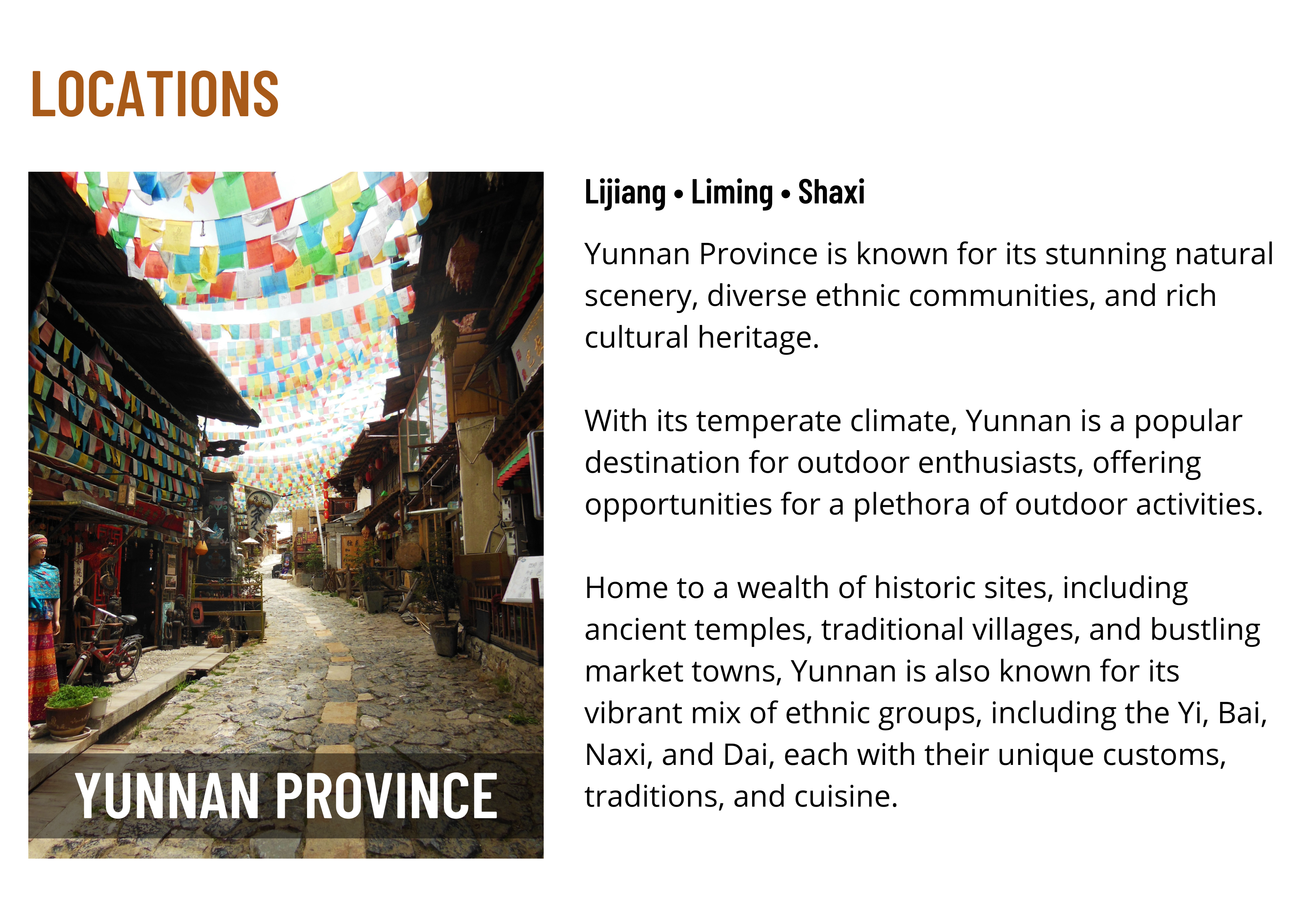
Yunnan
Red sandstone valleys, ancient Naxi trade towns, Bai lake culture, and tropical rainforest at the Southeast Asian border.
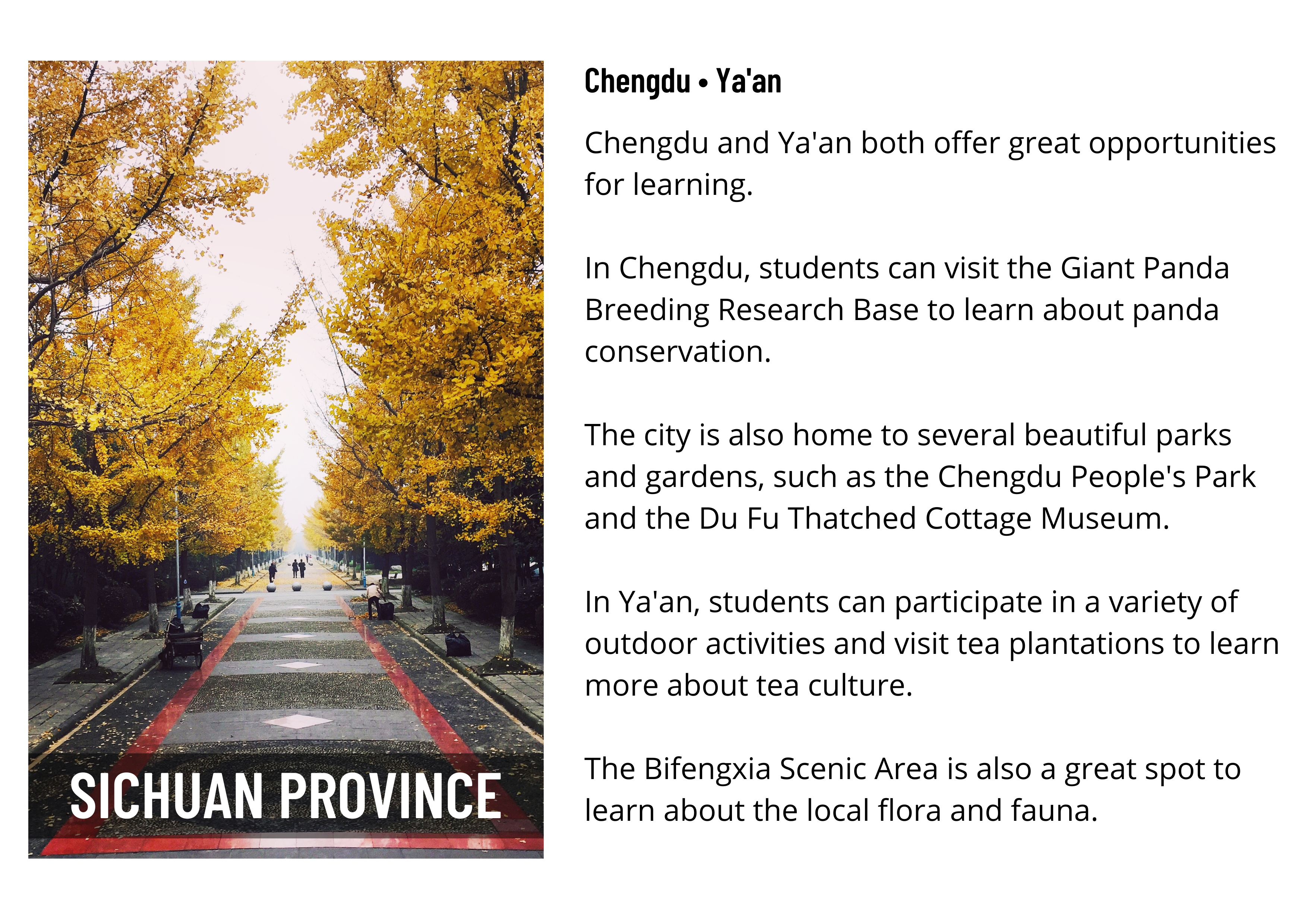
Sichuan
Panda conservation, two thousand years of urban confidence, and the gateway to western China.
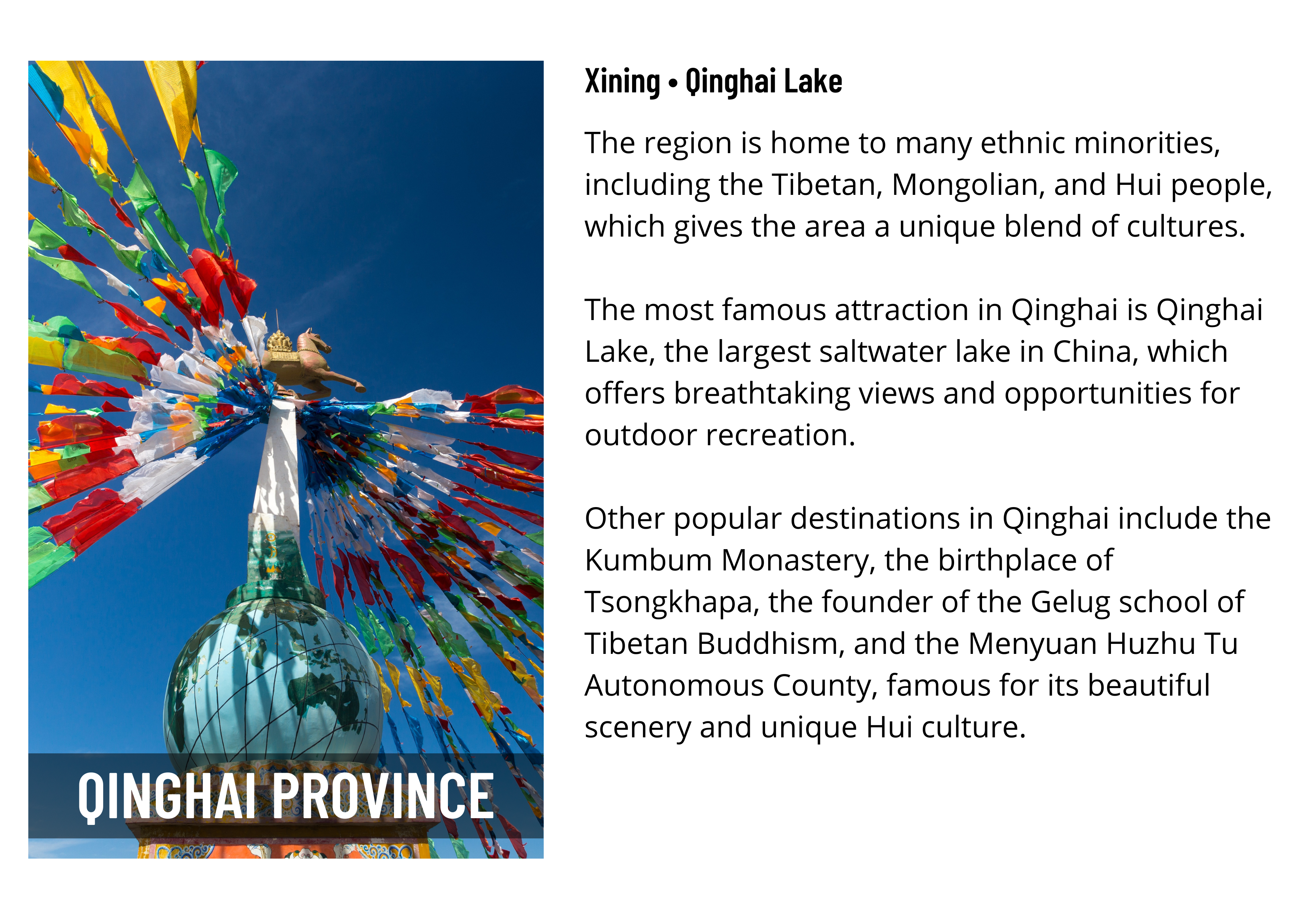
Qinghai
The threshold of the Tibetan Plateau. Han, Hui, and Tibetan cultures, altitude physiology, and Tibetan Buddhist heritage.
Beyond China's
Borders
For schools looking to extend their program geography. Familiar logistics, extraordinary terrain.
Thailand
Limestone karst coastlines, jungle trekking, and northern highland culture.
Malaysia
Rainforest ecology, orangutan conservation, and some of the world's most biodiverse terrain.
Not Sure
Where to Go?
Tell us what your school needs. We will recommend the right location and build the program around it.
Start the Conversation How We Build Programs